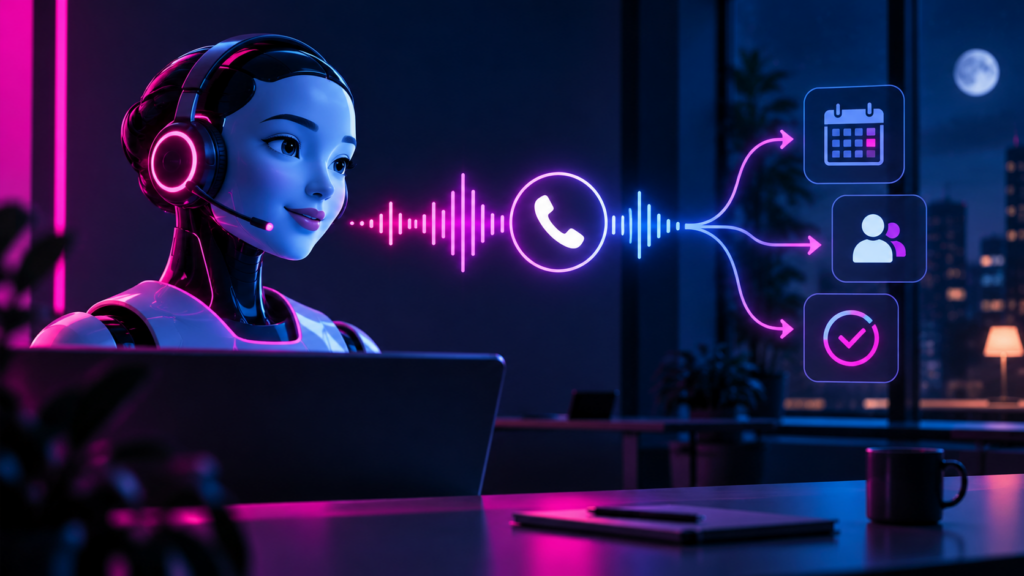
A missed call can be a missed opportunity, especially when a small team is serving customers during busy periods. An AI voice agent can answer defined questions, collect caller details, and route the next step after hours. It works best as a carefully bounded front door, not as an unrestricted replacement for staff.
Choose the calls worth automating
Good candidates include hours and service-area questions, basic intake, booking requests, and messages that can be routed with clear rules. Calls involving complaints, sensitive information, or unusual decisions should move to a person.
- Define what the agent can answer confidently.
- Collect only the information needed for the next step.
- Offer a human route when the caller asks or the intent is uncertain.
Design for clarity and consent
Callers should know they are interacting with an automated system and how to reach the business. Keep prompts short, confirm important details, and provide a fallback if speech recognition fails.
- Use concise prompts and confirmation steps.
- Set expectations for response timing.
- Review recordings and transcripts under appropriate privacy controls.
Connect the call to the team
Digital Allo’s AI voice agent service can be scoped around after-hours coverage, lead qualification, appointment routing, or call triage. Start with one queue and define the handoff before expanding.
- Create an escalation list.
- Decide what becomes a CRM record.
- Track missed intents and revise the call flow.
AI voice agent or IVR menu?
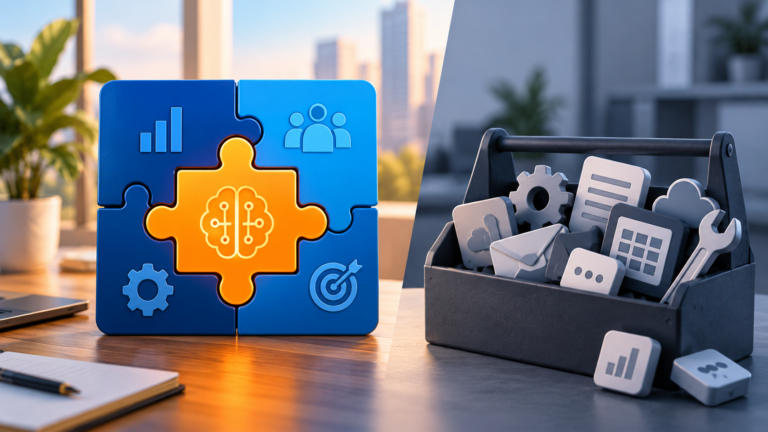
Traditional interactive voice response (IVR) systems ask callers to press keys or say simple options. An AI voice agent understands natural speech within a defined scope. Both can be the right tool.
| Keypad IVR menu | AI voice agent | |
|---|---|---|
| How callers interact | Press 1, 2 or 3 | Explain their need in their own words |
| Best for | A few clear routes, such as sales, support or accounts | Collecting details, answering common questions, after-hours intake |
| Setup and testing | Simple and predictable | Needs scripts, test calls, accents and noise testing |
| Risks | Frustrating long menus | Misunderstanding, over-promising, privacy of recordings |
| Works with the other? | Yes, can hand callers to an agent | Yes, can route to existing queues |
A sample after-hours call flow
- Greeting that says the caller is speaking with an automated assistant for the business.
- Ask for the reason for the call in a sentence.
- If it is urgent and on an approved list, give the emergency instruction or on-call route.
- Otherwise collect name, callback number and a short summary, and confirm them back.
- Say when the team will call back, then end the call.
- Send a summary to the right person or CRM record for the next business day.
Privacy and consent
If calls are recorded or transcribed, tell callers at the start and explain why. Keep recordings only as long as needed, limit who can access them, and check how the voice platform stores and uses call data. Canadian privacy laws, including BC’s Personal Information Protection Act for many BC businesses, apply to the personal information collected.
A practical starting point
- Choose one call type to pilot.
- Make human handoff obvious.
- Review outcomes, not just answered calls.
Frequently asked questions
Can an AI voice agent handle every caller?
No. It should be limited to approved intents and provide a human path when the request is complex or sensitive.
Does it replace the phone number?
Usually it works through an existing call flow or routing setup; the implementation should preserve the customer’s familiar path.
Can an AI voice agent replace our IVR completely?
Sometimes, but it is often better to start by adding an agent to one queue, such as after-hours calls, and keep the existing menu for routes that already work well.
Further reading
- Office of the Privacy Commissioner of Canada: Consent
- BC Laws: Personal Information Protection Act
- Statistics Canada: AI use by Canadian businesses
How Digital Allo can help
Digital Allo plans AI voice agents around one call type first, with clear disclosure, a human route and a summary your team can act on. Tell us when calls are being missed and we will suggest a pilot.